The Ghost in the War Machine
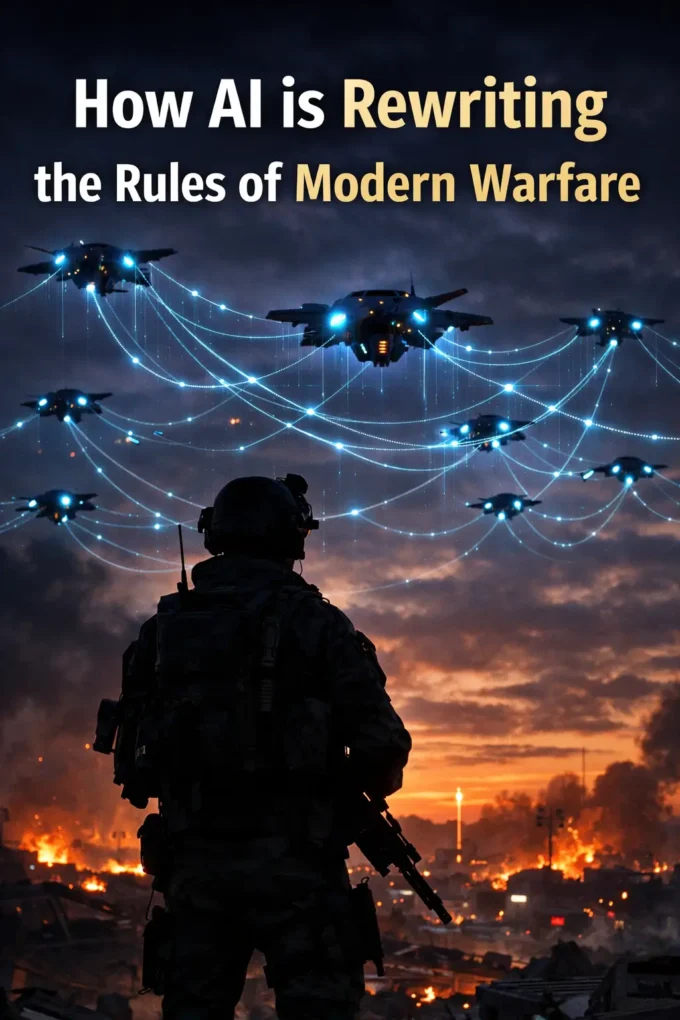
How AI is Rewriting the Rules of Modern Warfare. When we think of war, we often think of human endurance—the soldier in the mud, the general in the war room, the strategist relying on gut instinct. But if you look at the battlefields of the 21st century, specifically in conflicts like Ukraine or the shifting tensions in the Indo-Pacific, you’ll notice a new soldier present. It doesn’t eat, it doesn’t sleep, and it processes data faster than any human mind ever could.
It is Artificial Intelligence.
At pk-360.com, we usually talk about the latest gadgets and software updates. But today, we need to look at a different kind of tech stack: the one that decides the difference between victory and defeat. AI has moved from the research lab to the front line, and it is changing the nature of global security.
Here is how AI is proving to be the most effective—and most controversial—weapon in modern arsenals.
1. The End of the Fog of War
For centuries, military leaders have struggled with the “Fog of War”—the uncertainty in situational awareness. You never really knew where the enemy was or what they were about to do.
AI has effectively burned that fog away.
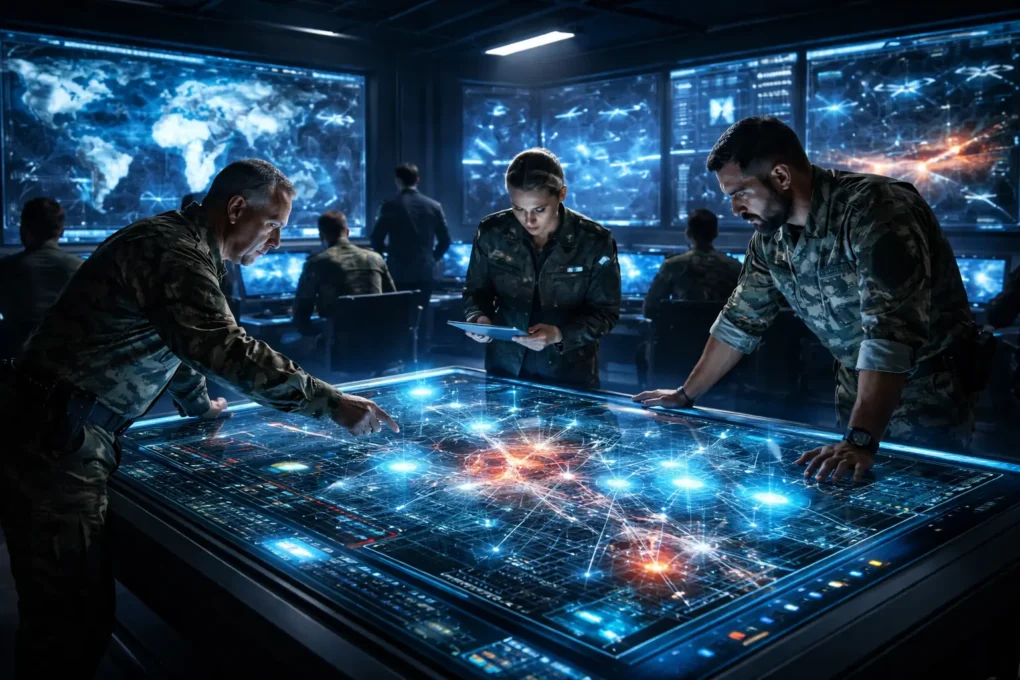
Modern militaries are now using AI-powered battlefield management systems. These platforms aggregate data from satellites, drones, ground sensors, and even social media. An AI can process this data in milliseconds, creating a “live map” of the battlefield.
Example: In urban combat, AI algorithms can analyze drone footage to distinguish between a civilian carrying groceries and a combatant carrying a rocket-propelled grenade (RPG) by analyzing gait, movement patterns, and heat signatures.
The Result: Reaction times drop from minutes to seconds. For a soldier on the ground, this means they get to see around the corner before they physically turn it.
2. The Rise of the “Loyal Wingman”
Perhaps the most visible application of AI in modern war is in autonomous and semi-autonomous vehicles. We aren’t just talking about the small quadcopters you can buy at a store.
We are talking about AI-piloted jets and drone swarms.
The United States Air Force is actively developing programs like Skyborg and the Valkyrie drone. These are unmanned aerial vehicles (UAVs) controlled by AI that fly alongside manned fighter jets.
The Concept: The human pilot acts as the “quarterback.” They give high-level commands like “go scout that area” or “suppress that air defense.”
The AI Role: The AI handles the complex flying, manages fuel efficiency, and even sacrifices itself if necessary to protect the human pilot.
Why it matters: In a future conflict involving near-peer adversaries (like China or Russia), the side with the better AI will not necessarily have the best pilots, but the best swarm logic. One human can now command a fleet of 10 AI jets, multiplying combat power without multiplying casualties.
3. Predictive Maintenance: Keeping the Machines Alive
War isn’t just about shooting; it’s about logistics. A tank that breaks down is just a heavy piece of scrap metal.
The U.S. Department of Defense uses AI systems like PRISM (Predictive Readiness Information System) to monitor the health of vehicles, aircraft, and ships. By analyzing vibration data, oil samples, and engine performance, AI can predict a mechanical failure weeks before it happens.
Instead of following a rigid maintenance schedule, mechanics fix exactly what needs fixing, exactly when it needs fixing. In a war of attrition, where supply lines are vulnerable, having a fleet that is 20% more available than the enemy’s fleet is a war-winning advantage.
4. The Cognitive Battlefield
We are also seeing AI used in information warfare.
Generative AI (like the tools we use for content creation) is now being weaponized to create hyper-realistic deepfakes for propaganda or to sow disinformation. On the flip side, AI is used to detect these deepfakes and counter hostile influence operations in real-time.
In modern wars, the first target isn’t always a military base—it’s the truth. AI is the ultimate tool for both attacking and defending the narrative.
The Ethical Crossroads
At pk-360.com, we believe in innovation, but we also believe in responsibility. This is where the topic gets uncomfortable.
If an AI system makes a targeting error, who is accountable? The programmer? The commanding officer? The machine itself?
There is a global debate about “meaningful human control.” The world is divided between nations that want a ban on autonomous lethal weapons (similar to chemical weapons) and those racing to develop them because “if we don’t, our adversary will.”
As a tech community, we must ask: Are we building tools that save soldiers’ lives, or are we building machines that make war too easy to start?
The Verdict
AI will not replace the courage of a soldier or the wisdom of a general. War remains fundamentally a human endeavor driven by politics, emotion, and survival.
However, AI is now the ultimate force multiplier. It turns data into speed, speed into advantage, and advantage into victory.
For a nation or a military force, ignoring AI today is like ignoring the airplane in 1940. The countries that master the algorithm will define the battlefields of tomorrow.
What are your thoughts on AI in modern warfare? Is it a necessary evolution for national security, or a Pandora’s box we should keep closed? Let us know in the comments below.
Stay tuned to pk-360.com for more insights where technology meets reality.
Leave a Reply