
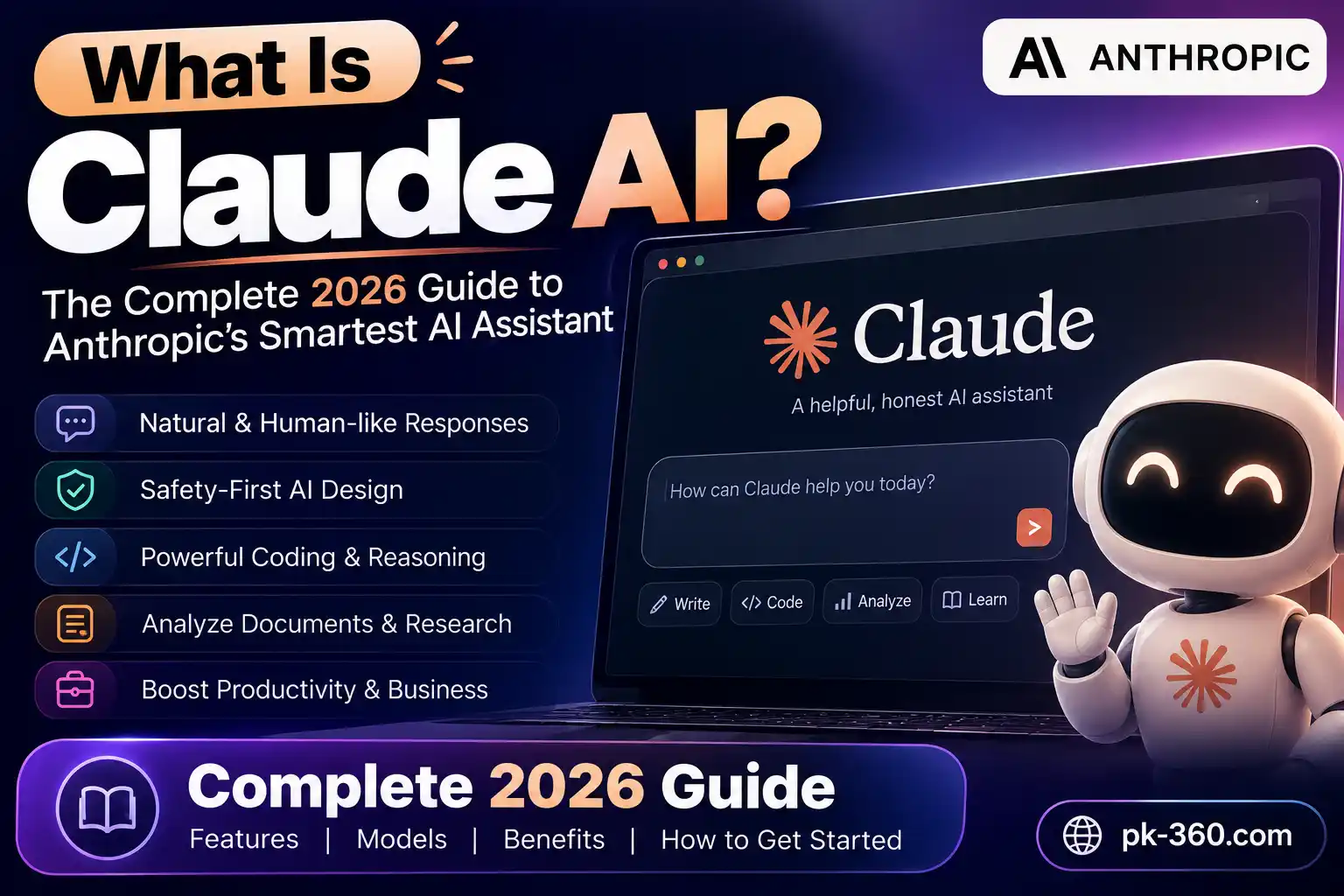
What Is Claude AI? The Complete 2026 Guide to Anthropic’s Smartest AI Assistant. If you’ve spent any time online in the last couple of years, you’ve probably heard the name Claude thrown around in the same breath as ChatGPT and Gemini. But what actually is Claude, who builds it, and why do so many developers, writers, and businesses swear by it?
This article is a complete guide that breaks everything down in plain language—no jargon, no hype, just what you need to know.
What Is Claude AI?
Claude is an AI assistant built by Anthropic, an AI safety and research company founded by former OpenAI researchers. Think of Claude as a conversational AI you can chat with, hand documents to, or ask to write, code, analyze, and brainstorm — much like ChatGPT, but with its own personality, strengths, and philosophy.
What sets Claude apart isn’t just what it can do — it’s how it was built. Anthropic has always framed Claude around a simple idea: AI should be helpful, but it should also be honest and safe. That mission shows up in the way Claude responds — thoughtful, balanced, and rarely robotic.
Who Made Claude, and Why the Name?
Anthropic named Claude after Claude Shannon, the mathematician often called the father of information theory. It’s a fitting tribute, since Shannon’s work laid the groundwork for the very idea of machines processing and understanding information.
Anthropic itself was founded in 2021 by siblings Dario and Daniela Amodei, along with a small team who left OpenAI over disagreements about how AI development should be approached. Since then, the company has grown into one of the leading names in artificial intelligence, competing directly with giants like OpenAI and Google.
Claude’s Model Family: Haiku, Sonnet, Opus, and Beyond
One thing that confuses newcomers is Claude’s naming system. Anthropic releases Claude in different “sizes,” each named after a form of writing:
- Claude Haiku — the fastest and most lightweight model, built for quick tasks, high-volume processing, and low-latency use cases.
- Claude Sonnet — the balanced, everyday workhorse. It’s fast enough for real-time conversations yet smart enough for serious professional work, which is why most people default to it.
- Claude Opus — the most powerful and capable model, designed for deep reasoning, complex problem-solving, and long, nuanced tasks.
Above these sits Anthropic’s newer Mythos tier, an experimental frontier class of models currently rolling out in limited form, representing where Claude is headed next.
Each new generation gets sharper at reasoning, coding, and understanding context — and the gap between “good AI” and “great AI” keeps shrinking every few months.
What Can You Actually Do With Claude?
Claude has grown far beyond a simple chatbot. Here’s what people actually use it for today:
Writing and content creation — blog posts, emails, scripts, product descriptions, and yes, articles exactly like this one.
Coding — Claude can write, debug, explain, and refactor code across almost every major programming language. Many developers now use Claude Code, an agentic coding tool that can read a codebase, make edits, run tests, and fix errors with minimal hand-holding.
Research and analysis — feed Claude a report, spreadsheet, or PDF, and it can summarize, extract insights, or spot patterns in seconds.
Business and productivity — Claude integrates with tools like Excel, PowerPoint, and Chrome, letting it build spreadsheets, design slides, or even navigate websites on your behalf.
Everyday problem-solving — from planning a trip to explaining a tricky concept, Claude works like a knowledgeable friend who’s always available.
Why People Choose Claude Over Other AI Tools
Every AI assistant has its own flavor. Here’s what tends to stand out about Claude specifically:
- Natural, human-sounding writing — Claude has a reputation for producing text that reads less like “obvious AI” and more like something a thoughtful person wrote.
- Strong reasoning on long, complex tasks — Claude can handle large documents and long conversations without losing track of context.
- A safety-first design philosophy — Anthropic builds Claude around careful, constitutional training methods meant to keep responses honest and grounded.
- Privacy-conscious approach — Anthropic doesn’t train on business customers’ data by default, which matters a lot for companies in healthcare, legal, and finance.
Of course, no AI is perfect for everyone. Some tools still lead in areas like native image generation or voice interaction. The right choice usually comes down to what you’re trying to accomplish.
How to Start Using Claude
Getting started takes less than five minutes:
- Go to claude.ai and sign up with an email or Google account.
- Choose your model (Claude defaults to Sonnet for most users).
- Start typing — ask a question, paste a document, or describe a task.
- Explore extras like file uploads, Projects, and Artifacts as you get comfortable.
There’s a free tier with daily usage limits, plus paid plans for people and businesses who need higher limits and more advanced features.
The Bigger Picture
AI assistants like Claude aren’t just novelty tools anymore — they’re becoming genuine work partners for millions of people, from solo freelancers to large enterprises. As models keep improving, the line between “using AI” and “just getting things done” keeps blurring.
Whether you’re a developer shipping code faster, a marketer drafting content, or simply someone curious about what AI can do for your daily life, Claude is one of the clearest examples of how far this technology has come — and it’s still moving fast.
Frequently Asked Questions
Is Claude AI free to use? Yes. Claude offers a free plan with daily message limits, along with paid tiers for higher usage and additional features.
Who owns Claude AI? Claude is developed by Anthropic, an independent AI safety and research company based in the United States.
Is Claude better than ChatGPT? Neither is universally “better” — they’re different tools with different strengths. Claude is often praised for natural writing and long-document reasoning, while other assistants may lead in areas like image generation or voice features.
Can Claude write code? Yes. Claude can write, debug, and explain code across most major programming languages, and Anthropic also offers a dedicated coding tool called Claude Code for larger development tasks.
Is my data safe with Claude? Anthropic states it does not train its models on business customer data by default and offers enhanced privacy options for teams and enterprises.
Click here to read about the Author of this article


